
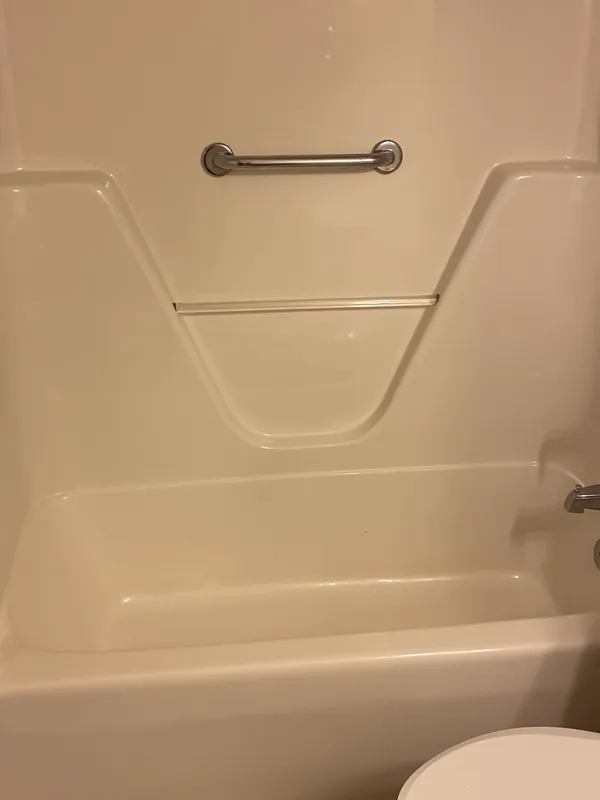
 Before
Safer showers: tub-to-shower conversions and grab bars
Most bathroom injuries happen in or around the tub. Here is what the research says, and three real jobs where we fixed it.
Before After
Tub-to-shower conversion 2026
We pulled the old fiberglass tub and built a tiled walk-in shower with a niche and mosaic floor.
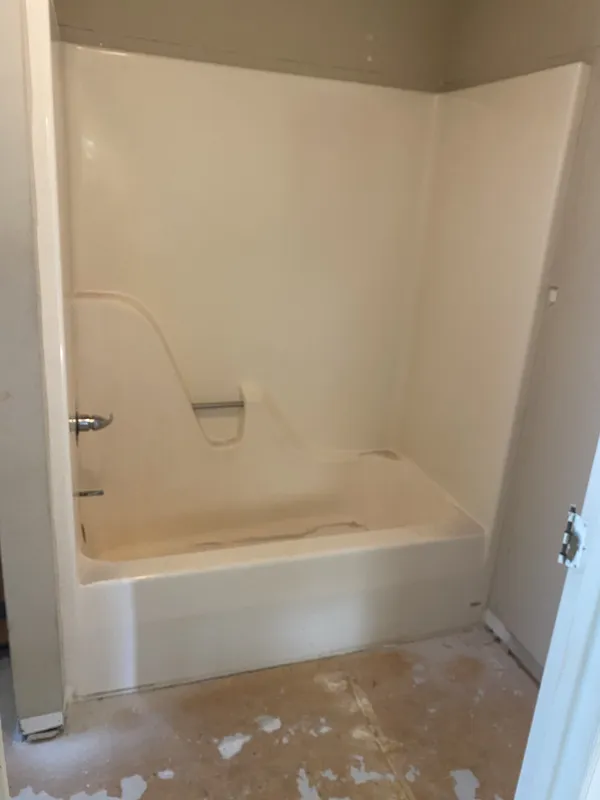 Before
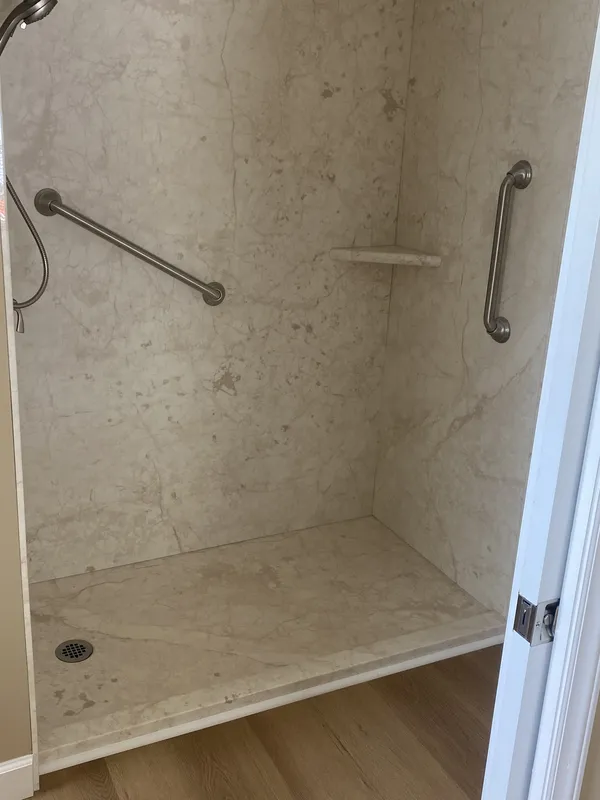 After
Walk-in shower install 2026
We tore out the old tub surround and installed a new walk-in shower with grab bars.
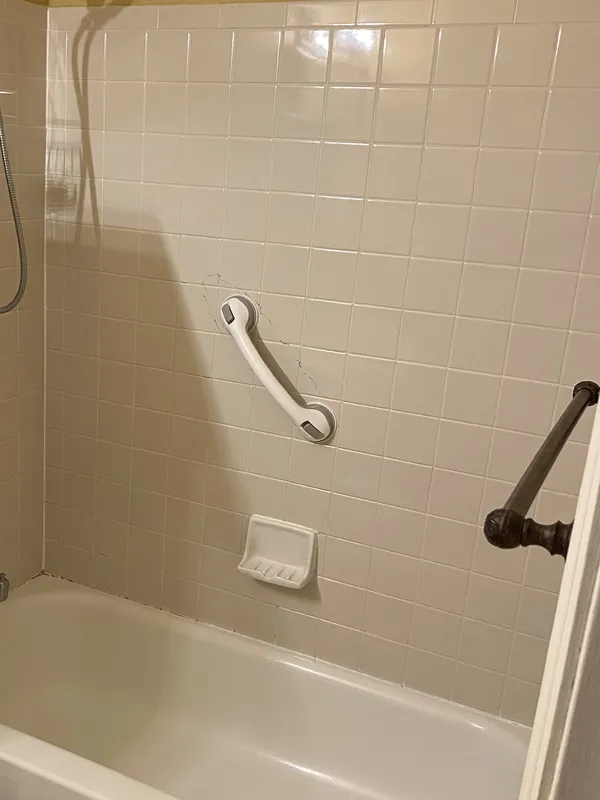 Before
 After
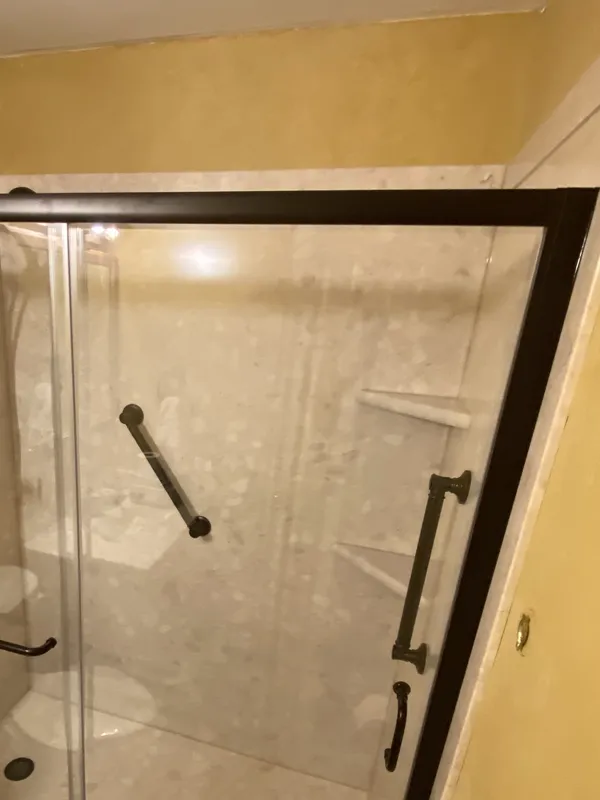
Tub-to-shower swap with glass doors 2025
We removed the tub down to the studs and installed a shower base, solid-surface walls, and a sliding glass door.
What the CDC found
The CDC studied bathroom injuries treated in U.S. emergency rooms. In one year, people 15 and older went to the ER for an estimated 234,094 bathroom injuries, and 81% were caused by falls [1].
About two thirds happened in the tub or shower. The riskiest moments were bathing, showering, and getting out of the tub or shower. The CDC suggests grab bars inside and outside the tub or shower, and noted only 19% of homes had them [1].
What we did
On these jobs we took out the old tub or tub surround and built a shower you walk into instead of climbing out of:
- A tiled walk-in shower with a built-in niche and a mosaic floor.
- A walk-in shower with grab bars set into the wall.
- A shower base with solid-surface walls and a sliding glass door, after taking the old tub down to the studs.
Grab bars only help if they hold. We anchor them into solid backing, not just drywall or tile.
Is it right for your home?
If you rarely use the tub, or someone in the house finds it hard to step over the edge, a walk-in shower is usually the better use of the space. Call or text a photo of your bathroom and we will tell you what makes sense.
Sources
- Stevens, J.A., Haas, E.N., Haileyesus, T. Nonfatal Bathroom Injuries Among Persons Aged ≥15 Years: United States, 2008. CDC, Morbidity and Mortality Weekly Report 60(22), June 10, 2011. www.cdc.gov/mmwr/preview/mmwrhtml/mm6022a1.htm