
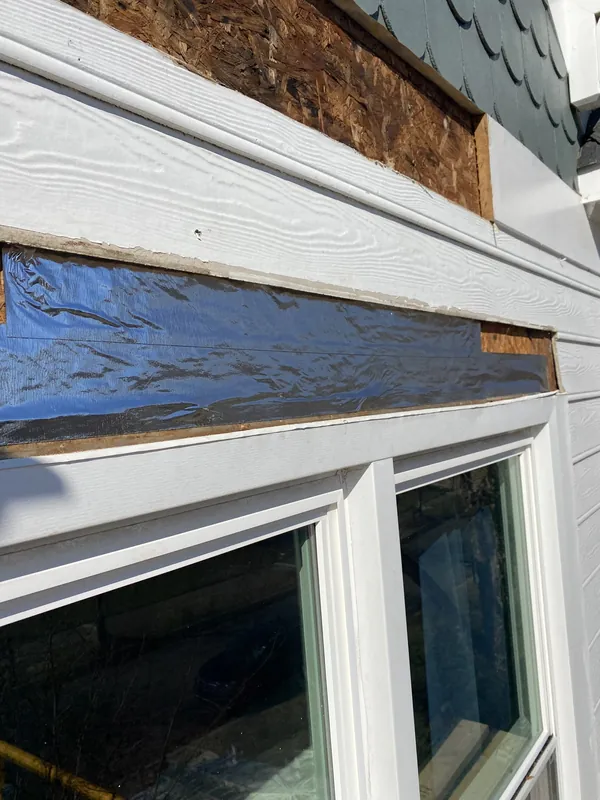
 Before
Wood rot repair: trim, fascia and siding
Rotted wood never fixes itself. Here is how we handle it, using two real jobs from around Lake Norman.
Before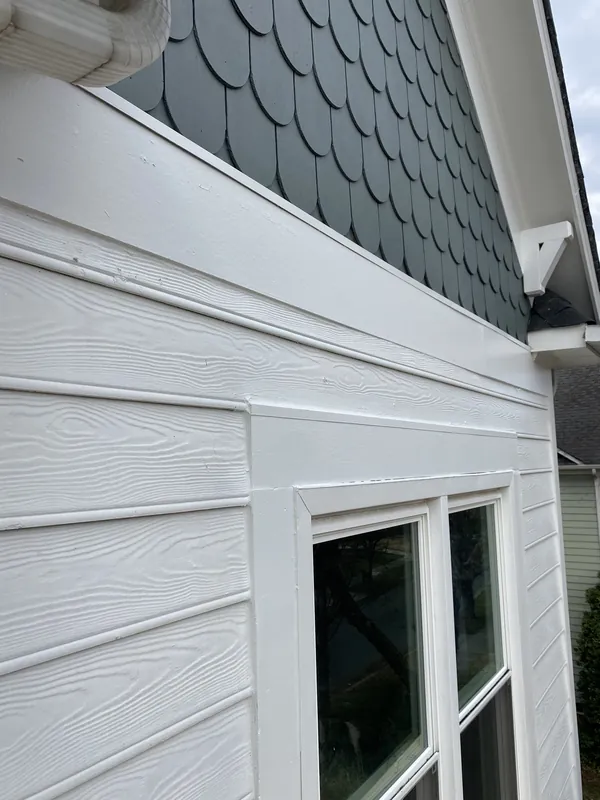 After
Wood rot repairs: trim, fascia and siding 2026
We cut out rotted trim, fascia, and siding, then wrapped, replaced, primed, and painted it.
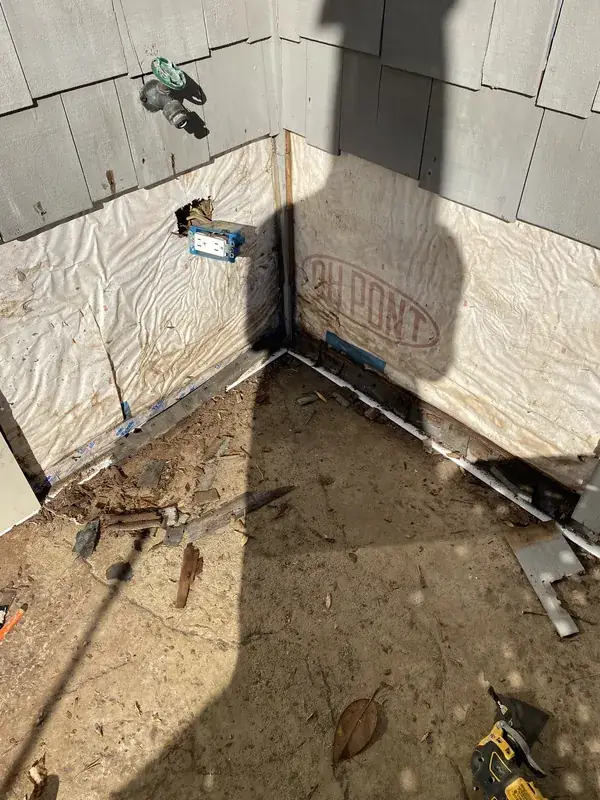 Before
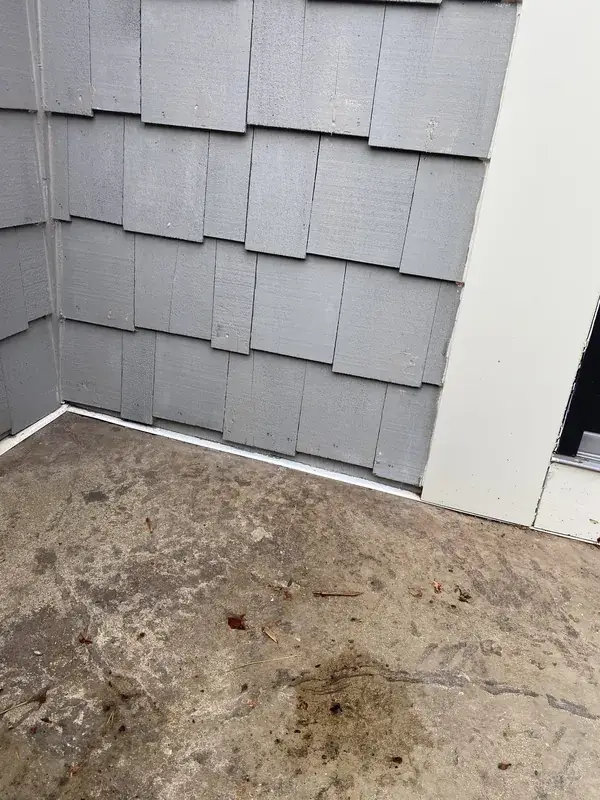 After
Cedar siding repair 2025
We cut out the rotted cedar siding and patched it with new cedar boards.
The problem
On the first job, the trim band above a row of windows had gone soft. When we opened it up, the rot ran deeper than the paint showed, into the trim, the fascia and part of the siding. On the second, a section of cedar siding at the base of a wall had rotted through.
Why wood rots
Rot is a fungus, and it needs water. Researchers at the USDA Forest Products Laboratory put it plainly: decay fungi need wood moisture of at least 20% to grow [1]. Wood that stays dry does not rot.
So rot tells you something: water is getting in and staying there. Usually it comes from a gutter that overflows, a missing flashing, a bad caulk joint, or a board that sits too close to the ground. If you only swap the board, the new one rots too.
What we did
- Cut out every soft piece, back to solid wood.
- Found and closed the path the water was taking.
- Wrapped and replaced the trim and fascia, and patched in new boards to match the siding.
- Primed and painted so the new wood is sealed on every face.
What to look for at your house
Push a screwdriver into painted trim around windows, door bottoms, and anywhere a gutter drips. If it sinks in, or the paint keeps peeling at the same spot, call us before it spreads into framing.
Sources
- Lebow, S.T. and Lebow, P.K. Internal Moisture Content and Temperature of Standardized Aboveground Wood Durability Test Specimens. USDA Forest Service, Forest Products Laboratory. research.fs.usda.gov/treesearch/56748